No mirrors, no screens, no phones. Its members say it is the only hour of the day they finish.

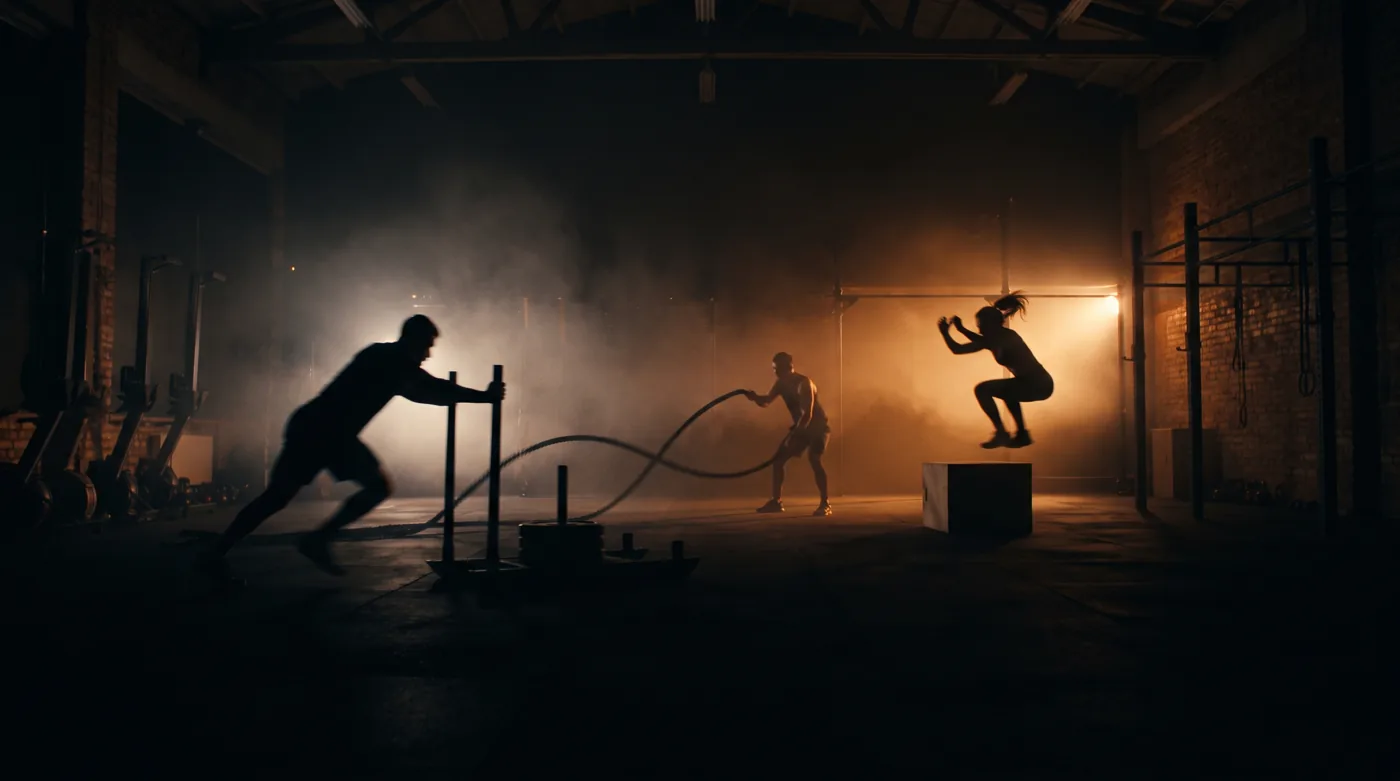
At 19:00 the instructor closes the door and switches off the lights. There are no mirrors, no screens on the machines and no phones allowed past the lockers.
For the next fifty minutes thirty people train by the glow of two amber lamps and the sound of each other breathing.
The idea
The gym is in a former warehouse by the canal. Its founder trained athletes for fifteen years and noticed that his clients spent a third of each session looking at something other than the work.
"They checked the mirror, they checked the clock, they checked the phone," he said. "I took all three away and the sessions got shorter and better."
There is no music. Timings are called out loud.
What a session is
- Ten minutes of warm-up, done as a group
- Three blocks of twelve minutes: push, pull, carry
- Four minutes of lying still at the end
Nobody can see how much anyone else is lifting. Members say that changes what they choose to pick up.
Does it work
The gym does not publish results and does not weigh anyone. What it tracks is attendance. Eight in ten members come at least twice a week, about double the usual rate for the industry.
A physiotherapist who refers patients there says the dark removes the comparison that makes people overreach.
Not for everyone
Some leave after one visit. The lack of light unsettles them, or they miss the playlist. The founder refunds them without argument.
Those who stay tend to describe the hour the same way: it is the only part of the day they finish.
The lights come back on at 19:50, slowly.
